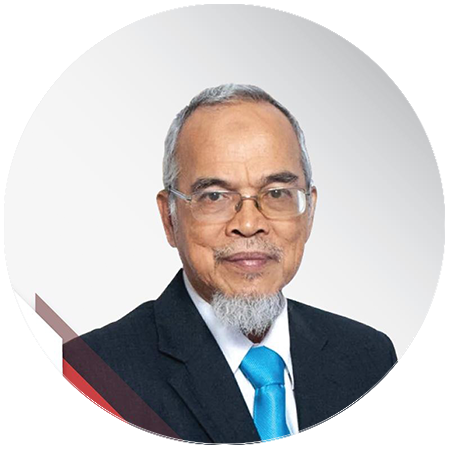
Mohamed Bin Awang Lah
Neutral Transmission Malaysia Sdn Bhd

Yuki Low
NTT-AT
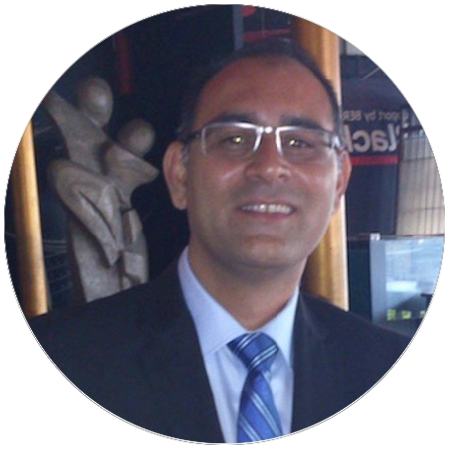
Aditya Kaul
HPE Juniper Networks
Mohamed Bin Awang Lah
Neutral Transmission Malaysia Sdn Bhd
Managing Director
Dr Mohamed was the Chief Executive Officer of JARING Communications Sdn Bhd, the pioneer Internet Service Provider in Malaysia, until November 2010. He was personally instrumental in establishing and expanding Internet services in Malaysia in the late 1980’s while working in MIMOS.
Initially set up as an R&D project, JARING was a national development program, which became a full-fledged service provider in 1992. Dr Mohamed has been involved in Internet development in
Malaysia for more than 40 years, starting with personal initiative in 1983, while working at the Faculty of Engineering, University of Malaya. He is pursuing efforts to reduce the cost of broadband through the sharing of infrastructure at the national level.
While with JARING, Dr Mohamed has engineered a few pioneering efforts for Malaysia. These include the first long-distance (more than 800 km) IP-over-Fibre network running at 2.5 Gbps in 1999, the first nationwide IP-VPN infrastructure in 2001, the first large-scale nationwide satellite-based broadband service for 2,000 remote schools in 2004, and broadband telephony (with the first block of a new telephone numbering scheme with 015 prefix) and the largest deployment of wireless broadband services starting in 2004.
In MIMOS, Dr Mohamed was actively involved in spearheading several network security initiatives. This has led to the creation of MyCERT and later NISER (now CyberSecurity Malaysia). Dr Mohamed was also the first domain manager for.MY (now independently managed by MYNIC BERHAD) starting from 1987. He played an active role in the early promotion of the Open Systems, which laid the foundation for the development of the Internet in Malaysia.
Prior to joining MIMOS, Dr Mohamed was a lecturer and a deputy dean at the Faculty of Engineering, University of Malaya. He graduated with first class degree in Electrical and Electronic Engineering from University of London King’s College in 1976. Later on, he continued his studies at the same university for his doctorate. He received an honorary doctorate in Information Technology and Communications from Universiti Pendidikan Sultan Idris (UPSI) in 2006. He also received an honorary doctorate in information technology from Universiti Tenaga Nasional (UNITEN) in 2009.
Dr Mohamed is a Fellow of the Academy of Sciences Malaysia. He was a senate member of the Open University of Malaysia until the end of 2016.
He was the first Chairman of the Malaysia Internet Provider Association, which operates the Malaysia Internet Exchange (MyIX)] until 2010. He is now the Chairman of the Board of Directors, UNITEN R&D Sdn Bhd and MY.NeuTrans.
In 2016/2017, he chaired the Task Force on Cyber Security, Academy of Science Malaysia (ASM), which produced a report “Cyber Security: Towards A Safe and Secure Cyber Environment”, presented to the National Science Council on 10th Aug 2017.
Looking Back to Move Forward: A Case for Infrastructure Sharing
I started to learn about Internet technology in 1983. After some laboratory experiments and small-scale field trials, it took almost 10 years to launch the first Internet service in Malaysia (JARING in1992). We were the only service provider, and we need to leased infrastructure from the main telco then – who inherited infrastructure from Jabatan Telekom Malaysia. Around 1997, government started issuing licenses for Internet services to a few telcos. These new licensees became our competitors, but we have no choice except to depend on one of them for our basic infrastructure. Conflict of interest started to appear. It was very challenging as we were not allowed to build our own infrastructure, presumably to avoid duplication. However, other telcos continue to build their own exclusive infrastructures!
When three telcos build their own fibers on the same road or in the same geographical region, the overall cost to the industry are three times higher. However, the total number of users in the area are the same. Hence, each user will have to effectively pay three times higher. The analogy can be extended for the whole country.
Sharing of infrastructure is therefore critical to reduce the overall cost to the industry and eventually price to the end-users. Unfortunately, we do not have any formal mechanism or regulatory framework to share infrastructure for the industry, other than limited partnerships among some willing players.
Effective sharing of infrastructure can only be done if:
a) The owners of the infrastructure (lessors) do not compete against their own customers (lessees).
b) The infrastructure must be open access with the same terms and conditions of services.
c) To enable fair competition among the lessees, only passive infrastructure (such as dark fibers, poles, towers) should be shared. The lessees shall be free to have their own value-added services using active equipment and compete among themselves.
Over the last forty years, we seemed to have ignored these basic principles for infrastructure sharing. The Communications and Multimedia Act (CMA) 1998 only encourage infrastructure sharing without any specific legal provision. The fact that a single entity can have all licenses (NFP, NSP and ASP) makes it very difficult to enforce infrastructure sharing.
In this talk, some real-life examples will be discussed.
“I started learning about Internet technology in 1983. After laboratory experiments and small-scale field trials, it took almost 10 years to launch Malaysia’s first Internet service, JARING, in 1992. At the time, we were the only service provider and depended on leased infrastructure from the incumbent telco.
When new Internet service licenses were issued to several telcos in the late 1990s, competition increased, but infrastructure dependency remained. This created significant challenges, particularly as some operators were allowed to build exclusive infrastructure while others were restricted from doing so.
The duplication of infrastructure such as multiple telcos laying separate fiber networks along the same routes significantly increases industry costs, which are ultimately borne by end-users. Sharing infrastructure is therefore critical to reducing costs and improving efficiency across the industry. However, Malaysia still lacks a comprehensive regulatory framework for effective infrastructure sharing.
Effective sharing of infrastructure can only be done if:
a) The owners of the infrastructure (lessors) do not compete against their own customers (lessees).
b) The infrastructure must be open access with the same terms and conditions of services.
c) To enable fair competition among the lessees, only passive infrastructure (such as dark fibers, poles, towers) should be shared. The lessees shall be free to have their own value-added services using active equipment and compete among themselves.
In this talk, real-life examples and lessons from Malaysia’s Internet development journey over the past four decades will be discussed.
Yuki Low
NTT-AT
Regional Sales Manager
Yuki is a business development and sales leader with over 20 years of experience across Southeast Asia. Currently leading regional sales at NTT Advanced Technology,
Yuki specialises in fiber optics solutions, including cleaning systems, polishing equipment, and optical switches.
With a strong track record in driving growth and building strategic partnerships, Yuki brings practical insights on market expansion, solution selling, and the evolving future of connectivity in the region.
Fundamental techniques of maintaining optical connections in the multi fiber connector
The presentation will explain the basics of MPO connectors and introduce some useful techniques and key points to know when using MPO connectors.
The paper covers basic information such as connector construction, polarity, types, and cleaning precautions.
Aditya Kaul
HPE Juniper Networks
Principal Solution Architect
Aditya is a technology evangelist, innovator and a seasoned telecommunications specialist with a background in Planning, Design, Implementation and Operations of NexGen IP Architectures. Aditya holds an in-depth understanding of the Services Business and has been a key contributor in Planning and Designing Future State Architectures. Aditya is working at HPE Juniper Networks as a Professional Services Principal Solution Architect for APAC.
From Automated to Autonomous: Orchestrating the Network with Agentic AI
The complexity of modern infrastructure has outpaced traditional automation. The solution lies in Agentic AI—a revolutionary approach where multi-agent ecosystems work in tandem to manage the network lifecycle. Using a framework of MCPs and RAG, this architecture enables “reasoning-based” operations that adapt to network state changes in real-time.
Through use-case demonstrations—including BGP troubleshooting, automated audits, DC Provisioning and MOP generation—we will showcase how Agentic AI reduces operational windows from hours to minutes. Discover how to transition your organisation from rigid playbooks to a fluid, autonomous architecture that validates and optimizes every move it makes.
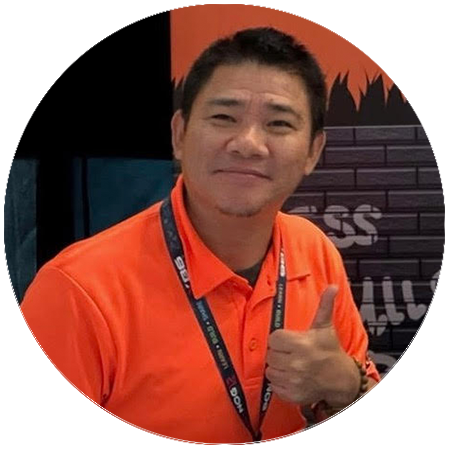
Tashi Phuntsho
FLEXOPTIX
Evangelical Optician
Tashi is currently the APAC Lead and Technology Evangelist at FLEXOPTIX.
Originally from the Himalayas, Tashi led the network engineering team @Bhutan Telecom before joining APNIC as a Senior Network Analyst and Trainer until 2022. Tashi also assists NSRC with workshops at NOGs and engineering assistance engagements in APAC.
Tashi volunteers as PC member for APRICOT, SANOG, btNOG, mnNOG and MYNOG.
IP over DWDM – What IP Folks Should Know.
Coherent pluggables such as 400ZR/ZR+ and 800ZR/ZR+ are starting to blur the traditional line between IP routers and DWDM systems.
This opens the door to a much simpler network model: remove transponder layers, drive wavelengths directly from router ports into an open line system, gain better visibility into link conditions, and reduce power consumed per bit.
This talk will recap coherent fundamentals, discuss what makes IPoDWDM a practical option for DCI and regional backbone links, and review what IP folks need to consider before going optical.
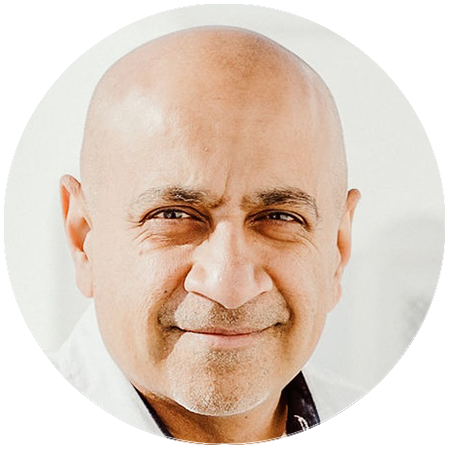
Paresh Khatri
Nokia Corporation
Network Architect
Paresh Khatri is the CTO and Chief Architect for the IP Networks Division for Nokia Corporation in APAC. In this role, Paresh is responsible for formulating platform and architecture strategies to meet the varied demands of operators in the Asia-Pacific region. He has been responsible for architectural design for the largest IP transformation projects in the region, and is now working closely with service providers as they address the growing demand for scale and new services that will be enabled by the evolution to 5G/6G, AI workloads and the metaverse.
Paresh’s areas of expertise include the entire range of IP/MPLS technologies and applications, from the network core to the access network. His current areas of interest include 5G transport, coherent routing, network slicing, segment routing and other SDN technologies.
Paresh has more than 27 years of experience with both service providers and vendors in building carrier-grade IP/MPLS networks.
Paresh is a regular speaker at industry conferences in the APAC region and also actively participates in a number of telecommunications industry standards bodies.
Paresh holds a Bachelor of Electronic Systems Engineering (First Class Honours) and a Bachelor of Information Technology from the Queensland University of Technology.
Cryptography in the Quantum Era
As the threat of quantum computers becomes ever more real, cryptography is at a crossroads. In this session, we will provide an overview of how classical cryptography can be compromised by the power of quantum computing and what the post-quantum world looks like.
Agenda:
1. Quantum computing – evolutions in quantum computing capability and the threat posed to cryptography.
2. Impact of quantum computing on cryptography – a deeper look at the impact of quantum computing on symmetric and asymmetric cryptography.
3. The post-quantum future – the solutions we have to counter the quantum threat and what operators can do to prepare right now.

Anurag Bhatia
Hurricane Electric
Network Researcher
Working at a global backbone operator & datacenter provider – Hurricane Electric, and based out of India. I spend a lot of time looking at BGP routing tables, traceroutes across the ocean, interesting patterns & tooling around those patterns. Besides routing, I got lot of interest in DNS, root DNS servers, network automation & virtualization.
ASPA – RPKI for Path Validation
This presentation covers the use of ASPA (Autonomous System Provider Authorization) to bring the benefits of RPKI for AS_PATH validation, besides the existing use for route origin validation. The talk also covers Hurricane Electric’s implementation of ASPA across the AS6939 backbone.
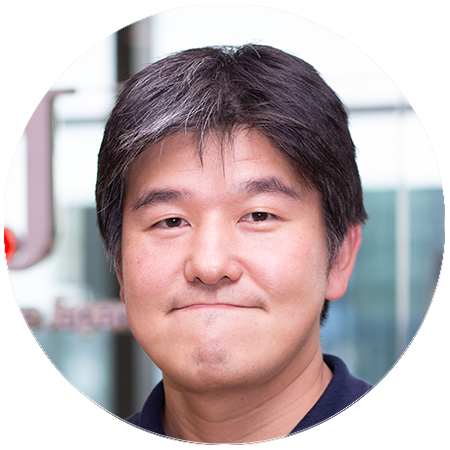
Yoshinobu Matsuzaki
Internet Initiative Japan
Network Engineer
Yoshinobu Matsuzaki is a Principal Engineer at Internet Initiative Japan Inc. (IIJ/AS2497), a pioneering commercial ISP in Japan. He has decades of experience in network operations with the IIJ backbone network team. His areas of expertise include network design, network operation, network security, and DNS. He has given numerous talks at JANOG, bdNOG, RIPE, and APNIC meetings, as well as other workshops.
DNS query trends
At IIJ, we conduct yearly measurements on our full resolvers and do various analyses. In this talk, using the latest data from October 2025, I will report DNS query trends and discuss better DNS operations
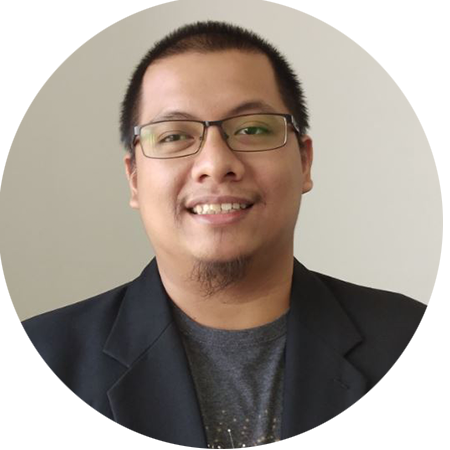
Raja Akmal
X86 Network
Managing Director
Raja Akmal has over 15 years of experience in network engineering, IP Core and Carrier Ethernet Network. Having been involved in various roles from operations, presales, product & service delivery with both domestic and international service providers. He is the founder and Managing Director of X86 Network Sdn Bhd, a connectivity service provider with a focus on regional connectivity, specifically on Data Center Interconnect (DCI), Dedicated Internet Access & Global Ethernet Services.
Building Scalable Networks with Flexible Open Line DWDM Systems
As bandwidth demand continues to accelerate across data centers, cloud platforms, AI workloads, and cross-border connectivity, traditional transport network architectures are increasingly challenged by cost, scalability, and vendor lock-in limitations. Open Line DWDM Systems are emerging as a practical and scalable alternative, enabling operators to build high-capacity optical transport networks with greater flexibility, operational control, and commercial efficiency.
This session shares real-world deployment experiences and operational lessons from building metro and regional Data Center Interconnect (DCI) networks using flexible open optical architectures. The talk will explore how operators can combine disaggregated optical systems, coherent optics, and open line systems to scale from 100G to multi-400G environments while maintaining interoperability across multiple vendors and platforms.
Key topics include:
* The evolution from traditional closed DWDM systems to open optical networking
* Practical architecture design for scalable metro and regional DCI
* Operational considerations for amplified and unamplified optical paths
* Challenges in interoperability, optics qualification, and field deployment
* Cost optimization and faster service delivery through disaggregated approaches
* Lessons learned from deploying high-capacity DCI services in Malaysia and cross-border environments
The presentation is designed for network engineers, operators, ISPs, data center providers, and infrastructure planners seeking practical insights into modern optical transport strategies beyond conventional vendor-locked solutions.
By the end of the session, attendees will gain a clearer understanding of how flexible open line DWDM systems can accelerate network growth, improve operational agility, and support future scaling demands in increasingly bandwidth-intensive environments.
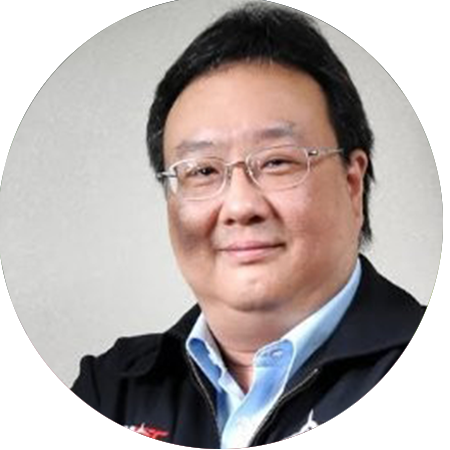
Tan Tze Meng
MDEC
SME Digital Infrastructure
Tze Meng graduated with a BSc(Eng) in Computer Engineering from Queen Mary College, University of London in 1986 and has been in the ICT industry for more than 38 years.
In 1988 he started a career with Telekom Malaysia’s IT Division and in 1994 had a key role in the launch of TMnet in 1996. In 2000 he left his role of managing TMnet’s international networks and was involved with two startups in data centre design, cybersecurity and Apple enterprise support.
In 2007 he joined MDEC was heading the Digital Infrastructure Department until Oct 2024. During his tenure at MDEC he had roles primarily on the development of the digital infrastructure ecosystem including data centres, connectivity and submarine cables.
Tze Meng is now on contract with MDEC as a subject matter expert on digital infrastructure.
Data Centre, Cloud and Connectivity Landscape in Malaysia
Malaysia, especially Johor, has become a focal point for data centre development in ASEAN. The economic impact was mainly from direct DC activities but is spreading to other sectors. The growth of data centres is also boosting the demand for communications with connectivity between Malaysia and Singapore being the primary route. However, developments in Malaysia are beginning to transform the landscape and there is increasing interest in landing more submarine cables directly in Malaysia.
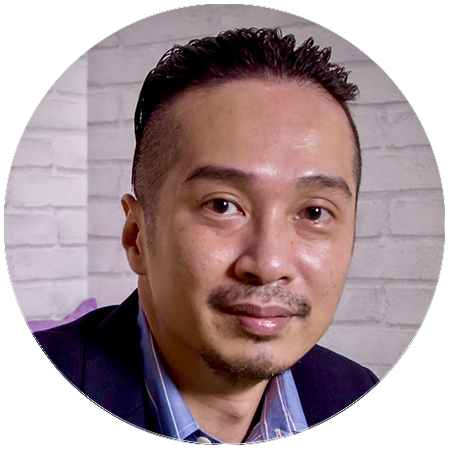
Alvyern Lee
A10 Networks
Senior System Engineer
Alvyern Lee has more than 20 years of experience in the IT and cybersecurity industry, working across enterprise, telecommunications, and managed security environments. Throughout his career, he has been actively involved in various technology and customer engagements across the region, working closely with partners, system integrators, and end users on different projects and initiatives.
He previously served as an SE Manager at Check Point Software Technologies, where he led technical and pre-sales engagements and worked closely with customers on the rapidly evolving cybersecurity landscape, covering areas such as emerging cyber threats, security challenges, and enterprise security strategies.
Currently with A10 Networks, Alvyern is involved in supporting the APAC business, working closely with regional customers, partners, and internal teams across multiple countries. He also works alongside channel partners and internal teams to support business expansion, customer enablement, and regional project execution across multiple industries.
Over the years, he has participated in numerous customer engagements, workshops, and industry events, sharing practical insights and real-world experience on today’s evolving cybersecurity landscape.
Advanced AI Application Defense Across Edge and Core
Explores the evolving cyber threat landscape shaped by the rapid adoption of artificial intelligence. As AI becomes widely used in applications and business operations, new security risks and attack methods are emerging that traditional defenses may not fully address. It highlights how AI-driven threats are changing the security environment and introduces the role of AI firewall concepts in protecting modern applications. The session provides an overview of current challenges, real-world risks, and the need for adaptive security approaches to safeguard AI-enabled systems.
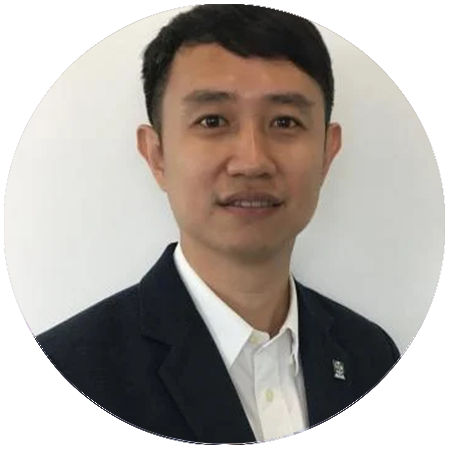
Sye Loong Keoh
University of Glasgow
Associate Professor
Sye-Loong Keoh is an Associate Professor in the School of Computing Science, University of Glasgow (UofG, Singapore campus). He is currently the Director of Research Programmes in UofG Singapore. He holds a Ph.D. in Computing from Imperial College London. Prior to joining Glasgow, he was a Senior Scientist at Philips Research Eindhoven, The Netherlands (Philips Lighting is now known as Signify). His areas of expertise include cyber security for Internet of Things (IoT), lightweight security systems for cyber-physical systems, and policy-based security management for pervasive and distributed systems.
He leads the cyber-security research activities in UofG Singapore where he has designed several lightweight authentication protocols and key management schemes for IoT, building management and industrial control systems. More recently, he is researching on new techniques for securing end-to-end communication and ensuring data provenance in IoT environment. While working at Philips Research, he was responsible for standardizing Marlin Digital Rights Management (DRM) technology for content protection, and lightweight security protocols for Philips’s IoT-based lighting systems.
Reliable Connectivity for Smart Public Transportation: A Johor Deployment
This presentation discuss a deployment of a smart city application to improve the urban mobility. The project started with public bus fleet data collection using an innovative non-GPS approach, utilizing Bluetooth Proximity Beacon with a range up to 70m to track bus location. In 2021, there was no open real-time GPS data available for public transit in Malaysia, and hence we had to design an alternative approach to perform fleet tracking. Our methodology for tracking the location of buses along their routes using Bluetooth Low Energy (BLE). Instead of installing a GPS device and 3G data connectivity on each bus, a BLE beacon (i.e., Estimote iBeacon) that periodically broadcasts Bluetooth signal is placed in the dashboard of the bus. When the bus passes by a bus stop that is equipped with a BLE detection device (Raspberry Pi Zero / Pi 3) that continuously scans for the beacon signal in the vicinity, it can detect the arrival of the bus at the bus stop. The bus location data and its arrival time are then sent to the cloud-based AI Prediction Service to estimate the arrival time of the bus at subsequent bus stops towards the destination. Since 2024, the Malaysian government has provided an open data portal for all BAS.MY fleet location and our system has transitioned into using the live GTFS-RT from the open data portal. The presentation also aims to have an open discussion with the network operators groups on possible innovation for securing the edge devices, the enablement of V2V and V2X communication, and the reliability and robustness of real-time AI inference for smart city applications.

Philip Paeps
NSRC
Senior Reality Engineer
Philip Paeps (“Trouble”) is an independent consultant. He provides research and development on low-level software, network operations and infrastructure security. Philip has worked on operating system and application software running on HSMs, payment terminals, consumer electronics, industrial control systems and scientific instruments. He supports clients running critical internet infrastructure and widely deployed unconventional computing devices such as agricultural robots and signage for public transport. He has considerable operational experience with routing, security, DNS, DNSSEC and email.
Philip works with the RouteViews project and the Network Startup Resource Center (NSRC) to assist with network routing research, security and training. He is a regular presenter at numerous internet development and operations conferences around the world.
In his so-called free time, Philip contributes to the FreeBSD project. He is a cluster administrator and the project’s postmaster as well as a member of the security-officer team.
The RouteViews Project: Update
RouteViews was initiated in 1995 at the University of Oregon to allow network operators see what their routing tables looked like from an external perspective. Over the years since, this community project has set up collectors in strategic locations around the world, allowing network operators a rich view of their routing announcements, and researchers a valuable resource for tracking the growth and variations in the global Internet infrastructure.
This presentation introduces the team behind RouteViews and shares the latest developments in the project, now operated on behalf of the global Internet community by the Network Startup Resource Center (NSRC). Some of the developments are a new peering policy, how to use the RouteViews system as a network operator and what are we working on for the future.
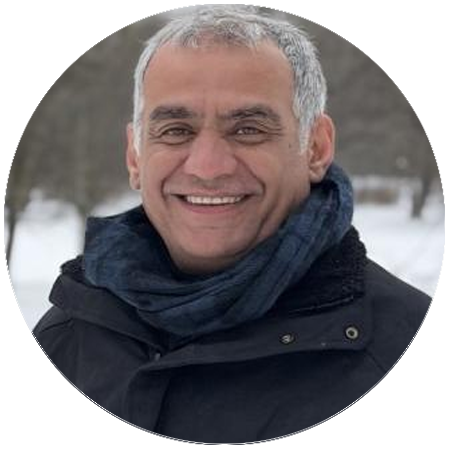
Prof. Tariq Zaman
ASSET, University of Technology Sarawak
Professor
Professor of Human-Computer Interaction in University of Technology Sarawak, Malaysia
Listening to the Internet Pulse at the Margins
As Malaysia advances toward comprehensive digital connectivity, exploring local network performance across diverse geographical region remains essential. In 2023, University of Technology Sarawak initiated a project to design and develop netStethoscope and myspeed.site, complementary tools to supplement existing monitoring frameworks with community-driven, crowed-sourced network performance data, particularly in rural Sarawak.
The netStethoscope employs low-cost Raspberry Pi-based devices for passive network monitoring, to address the gap in data collection through localized, less dependent on human intervention solution that performs continuous monitoring to enhance the transparency in QoS reporting. This decentralized approach provides an additional perspective on connectivity challenges, particularly in geographically isolated locations where traditional measurement methods may face logistical constraints.
Myspeed.site also integrate GIS-based visualization, for stakes and rights holders to gain spatially-aware insights into network performance patterns. Rather than replacing existing monitoring mechanisms, this system offers another data point, a community lens that can inform collaborative infrastructure planning and policy dialogue between regulators, operators, and communities.
For data visualisation, our approach introduces the Garden of Connectivity, a visualisation framework and proof of concept that transforms technical QoS metrics into intuitive floral representations, making network performance understandable beyond technical knowledge and skill. Each “digital flower” represents a provider’s performance across key indicators: download speed, upload speed, latency, and packet loss, with petals revealing compliance against MCMC’s MSQOS.
This research contributes to the broader conversation on broadband transparency, offering tools that support data-driven partnerships for bridging Malaysia’s digital divide.

Johan Jauhari Mukras
MYREN
NOC Manager
Johan Jauhari is currently serving as NOC Manager at MYREN. With over 8 years of experience in network infrastructure and operations, he specializes in designing scalable, high-performance campus, data centers and wide-area networks for numbers of organizations nationwide. Passionate about network automation and bridging the gap between legacy systems and next-generation connectivity, Johan is committed to driving Malaysia’s academic research capabilities forward through robust digital infrastructure.
MYREN – Bridging The Past, Empowering The Future
MYREN has long been the backbone of Malaysia’s research and education connectivity, evolving alongside the nation’s growing academic and data-driven demands. As we navigate the shift towards high-performance computing, massive data transfers, and the need for seamless collaboration, the network must transcend its traditional role.
This session provides an inside look at the transformation of the MYREN network infrastructure. We will dissect the technical journey of bridging legacy frameworks with modern, scalable architectures designed for the future.